
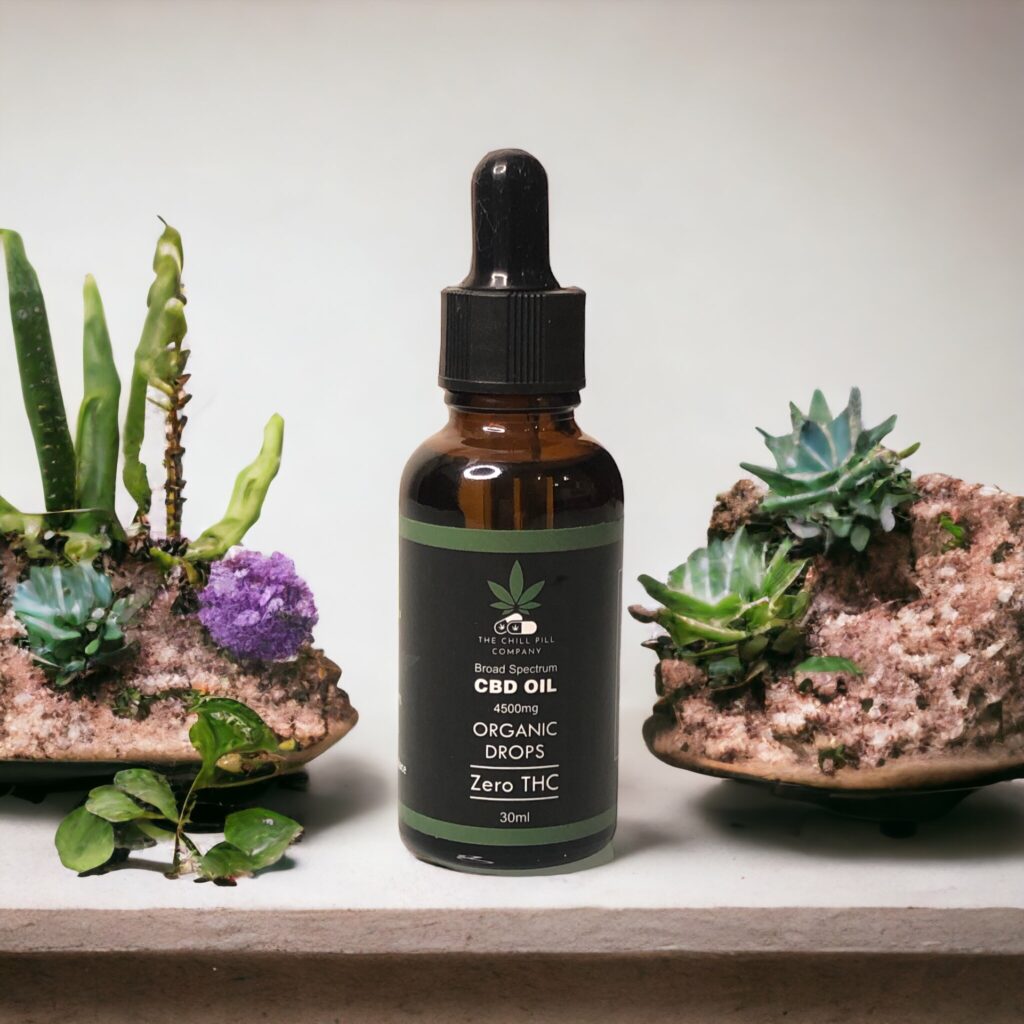
What does 1500mg, 4500mg or 5000mg CBD oil actually mean? These figures appear prominently on CBD oil labels, but they are frequently misunderstood. A larger milligram number indicates more cannabidiol in the bottle, not automatically a better product or a more appropriate formulation.
Consumers researching CBD Oil Australia often encounter products with similar bottle sizes but very different CBD concentrations. Understanding those differences is essential when comparing product labels.
For example, a 30mL bottle containing 1500mg of CBD provides 50mg of CBD per millilitre. A 4500mg bottle of the same volume contains 150mg per millilitre, while a 5000mg bottle contains approximately 166.7mg per millilitre.
These differences are mathematical, but their practical significance also depends on formulation, laboratory verification, medical suitability and legal access.
This guide explains how CBD strength works, compares three commonly advertised concentrations and explores the differences between CBD isolate, broad-spectrum and full-spectrum oils.
In this guide
- What CBD strength means
- 1500mg vs 4500mg vs 5000mg
- How to calculate CBD concentration
- Strength versus quality
- Different CBD extract types
- Price-per-milligram comparison
- Lab testing and THC claims
- Australian legal requirements
- Frequently asked questions
- What Does CBD Oil Strength Actually Mean?
CBD strength describes the amount or concentration of cannabidiol in a finished product.
CBD oil labels commonly express this information in three ways:
- Total CBD in milligrams: The total amount of CBD contained in the entire bottle.
- CBD concentration in mg/mL: The amount of CBD in each millilitre of liquid.
- CBD percentage: The concentration expressed as a percentage, using a defined measurement basis such as weight per volume.
These measurements are related but are not interchangeable without knowing the volume of the product.
Total CBD Is Not the Same as CBD Concentration
Consider two hypothetical products.
Product A contains 1500mg of CBD in a 30mL bottle. Product B contains 1500mg in a 10mL bottle.
Both have the same total CBD content, but Product B is three times as concentrated.
Product A:
1500mg ÷ 30mL = 50mg/mL
Product B:
1500mg ÷ 10mL = 150mg/mL
The total CBD is identical, but the concentration is different.
This explains why the milligram figure on the front of a bottle should never be interpreted without checking its volume and full ingredient declaration.
- CBD Oil 1500mg vs 4500mg vs 5000mg
The differences become clearer when three CBD concentrations are compared using the same bottle volume.
The following examples use a 30mL bottle, consistent with strengths advertised in Chill Pill Supplements’ CBD oil catalogue.
| Specification | 1500mg CBD | 4500mg CBD | 5000mg CBD |
| Total CBD | 1500mg | 4500mg | 5000mg |
| Bottle size | 30mL | 30mL | 30mL |
| CBD per mL | 50mg | 150mg | 166.7mg |
| Approximate % w/v | 5% | 15% | 16.7% |
| Relative concentration | Baseline | 3 times baseline | 3.33 times baseline |
Percentages assume milligrams of CBD per 100mL of finished liquid. They are calculated values, not independently verified laboratory results.
What Does 1500mg CBD Oil Mean?
A 1500mg CBD oil contains 1500 milligrams of cannabidiol in the entire bottle.
If the bottle holds 30mL, its nominal concentration is 50mg/mL.
This does not establish how much a person should use. The suitability of a particular concentration depends on the patient’s circumstances and professional medical advice.
What Does 4500mg CBD Oil Mean?
A 4500mg CBD oil contains three times the total cannabidiol found in a 1500mg bottle.
In a 30mL bottle, the nominal concentration is 150mg/mL.
A 4500mg bottle may contain CBD isolate, broad-spectrum extract or full-spectrum extract. The total CBD number does not identify which formulation it uses.
What Does 5000mg CBD Oil Mean?
A 5000mg CBD oil contains 5000mg of cannabidiol in the finished bottle.
For a 30mL bottle, the calculated concentration is approximately 166.7mg/mL.
Compared with a 4500mg bottle of the same volume, it contains approximately 11.1% more CBD.
That is a much smaller difference than the threefold concentration difference between 1500mg and 4500mg.
Important distinction: Higher total CBD content does not mean that a product is inherently safer, more effective or more suitable.
- How to Calculate CBD Concentration Correctly
Understanding the mathematics of CBD concentration can make product labels easier to interpret.
Formula 1: Total CBD to mg/mL
CBD concentration (mg/mL) =
Total CBD (mg) ÷ Bottle volume (mL)
For a 4500mg bottle containing 30mL of liquid:
4500 ÷ 30 = 150mg/mL
This means each millilitre contains a nominal 150mg of CBD.
Formula 2: Convert mg/mL to Percentage
For a weight-per-volume percentage, 1% w/v corresponds to 10mg/mL.
% w/v = mg/mL ÷ 10
50mg/mL = 5% w/v
150mg/mL = 15% w/v
166.7mg/mL = approximately 16.7% w/v
The percentage should not be confused with the proportion of CBD among all cannabinoids in an extract.
A laboratory may also report concentration in other units, including weight per weight. Such measurements require appropriate conversions.
Formula 3: Calculate the CBD in a Measured Volume
The CBD content of a measured liquid volume can be calculated by multiplying concentration by volume.
CBD amount (mg) =
Concentration (mg/mL) × Volume (mL)
For an illustrative 0.1mL volume:
- 50mg/mL × 0.1mL = 5mg
- 150mg/mL × 0.1mL = 15mg
- 166.7mg/mL × 0.1mL = 16.67mg
These are arithmetic demonstrations, not instructions or recommendations for CBD administration.
Why Calculating CBD Per Drop Is Less Reliable
Some CBD guides convert concentrations into milligrams per drop.
However, drop size can vary depending on the dispenser, oil viscosity and the way liquid is released.
Assuming every drop has an identical volume can therefore introduce measurement errors.
A calibrated measuring device and the instructions supplied by a qualified healthcare professional are more reliable than a generic drop-count assumption.
- Does Higher CBD Strength Mean Better Quality?
No. Strength and quality describe different product characteristics.
A product may contain a high concentration of CBD but still have problems involving labelling, manufacturing or contamination.
Likewise, a lower-concentration formulation may have appropriate quality controls and more clearly documented ingredients.
What Determines CBD Product Quality?
When comparing CBD Products, relevant quality considerations include:
- Accurate cannabinoid concentrations.
- Consistent manufacturing procedures.
- Identification of all active ingredients.
- Testing for relevant contaminants.
- Appropriate packaging and storage.
- Reliable batch identification.
- Applicable Australian regulatory compliance.
The Therapeutic Goods Administration maintains quality requirements for medicinal cannabis products under Therapeutic Goods Order 93 (TGO 93).
Those requirements cover areas such as cannabinoid content, manufacturing quality and specified testing criteria.
A large CBD milligram figure by itself does not demonstrate compliance with these requirements.
High Concentration Does Not Automatically Mean More CBD Is Used
A concentrated liquid contains more CBD in a given volume, but exposure also depends on the quantity administered.
For this reason, the concentration printed on the bottle cannot independently predict clinical outcomes or adverse effects.
Questions about treatment and individual suitability belong with an appropriate healthcare professional.
- Full Spectrum vs Broad Spectrum vs CBD Isolate
The CBD content of a bottle is only one part of its formulation.
Two oils with identical concentrations may differ substantially in their other cannabinoids and ingredients.
Full Spectrum CBD Oil
Full Spectrum CBD Oil typically contains cannabidiol along with other naturally occurring cannabis compounds.
Depending on the extract, these may include minor cannabinoids, terpenes and measurable THC.
Full-spectrum formulations are sometimes promoted using the concept of an entourage effect. However, there is insufficient evidence to conclude that every full-spectrum product is superior to a purified CBD preparation.
Importantly, the presence of additional cannabinoids means that total CBD strength alone cannot describe the complete chemical profile.
Broad Spectrum CBD Oil
Broad-spectrum formulations generally retain CBD and selected additional cannabinoids or plant compounds while undergoing processing intended to reduce or remove THC.
The actual composition varies between formulations.
A broad-spectrum label does not independently establish the absence of detectable THC. That claim should be supported by appropriate laboratory results.
CBD Isolate
Interest in CBD Isolate Australia often focuses on purified cannabidiol formulations and their cannabinoid content.
CBD isolate is a purified ingredient intended to contain CBD without the additional cannabinoids or terpenes associated with full-spectrum extracts.
It may be incorporated into a carrier oil such as hemp seed oil or MCT oil.
A CBD isolate formulation still requires suitable quality controls and testing of the finished product.
Why Two 4500mg Oils Can Be Different
Consider two hypothetical 30mL formulations:
- Product A contains 4500mg of CBD derived from CBD isolate.
- Product B contains 4500mg of CBD in a full-spectrum formulation.
Both have the same stated CBD concentration of 150mg/mL.
However, Product B may contain additional cannabinoids, while Product A is intended to contain purified CBD as its cannabinoid ingredient.
The products therefore cannot be considered interchangeable based on CBD milligrams alone.
- How to Compare CBD Oil Prices Per Milligram
A high-strength product may cost more per bottle while having a different cost per milligram of CBD.
Calculating price per milligram is one way to understand the arithmetic behind product pricing.
However, this calculation does not establish product quality, legal availability or clinical value.
Price-Per-Milligram Formula
Price per mg =
Product price ÷ Total CBD in milligrams
Consider three entirely hypothetical prices, unrelated to any specific retailer’s current offers.
| Example | Total CBD | Illustrative Price | Cost per mg |
| A | 1500mg | A$180 | A$0.120 |
| B | 4500mg | A$360 | A$0.080 |
| C | 5000mg | A$425 | A$0.085 |
In this illustration, Example B has the lowest cost per milligram.
Example C contains more CBD overall but is slightly more expensive per milligram.
This demonstrates why the highest-strength product is not automatically the lowest-cost option when compared on a per-milligram basis.
Why Price Per Milligram Is Not Enough
A meaningful product comparison also needs to consider:
- Whether the product is lawfully supplied.
- Its complete cannabinoid profile.
- Quality and laboratory documentation.
- The carrier oil and other ingredients.
- Packaging and stability information.
- Clinical suitability and prescribing requirements.
For medicinal products, the appropriate formulation should not be selected using price alone.
- THC-Free Claims and Laboratory Testing
CBD strength tells consumers how much cannabidiol a product claims to contain.
It does not necessarily tell them whether THC or other cannabinoids are present.
A product described using the term THC Free CBD Oil may be formulated from purified CBD isolate or THC-reduced broad-spectrum extracts.
However, marketing terms such as THC-free, zero THC and non-detectable THC should not be treated as identical without supporting evidence.
Understanding THC Laboratory Results
A certificate of analysis may report THC as:
- Not detected.
- Below the laboratory’s detection limit.
- Below its quantification limit.
- Present at a measurable concentration.
A result below a testing method’s detection limit does not establish that absolutely no THC molecules exist in the product.
The analytical method, reporting units and detection limits all matter.
What Should a CBD Certificate of Analysis Include?
A meaningful certificate of analysis, also called a COA, should be assessed for:
- Identification of the product tested.
- The batch or lot number.
- The date of testing.
- The testing laboratory.
- Measured CBD concentration.
- Measured THC and other relevant cannabinoids.
- Appropriate contaminant screening.
- Methodology and detection limits.
For instance, a bottle labelled 150mg/mL should not be assumed to contain exactly that amount without appropriate analytical verification.
Australian medicinal cannabis quality requirements specify allowable assay ranges for different dosage forms.
For many non-herbal formulations, the relevant TGO 93 assay range is 90% to 110% of the stated active ingredient content.
The precise regulatory requirements depend on the product and its classification.
Can THC-Free CBD Guarantee a Negative Drug Test?
No. A THC-free claim alone cannot guarantee a negative workplace or roadside drug-testing result.
Undeclared THC, manufacturing contamination and analytical limitations can create uncertainty.
Consumers should seek professional advice about drug interactions, driving and other relevant risks.
- How Does CBD Oil Strength Compare With CBD Gummies?
CBD strength is also presented differently across product formats.
For oils, manufacturers frequently state the total CBD content of the bottle and its concentration per millilitre.
For gummies, CBD content is generally expressed per individual piece.
Consumers searching for CBD Gummies Australia may encounter labels showing 600mg of total CBD across a bottle containing 60 gummies.
In this example, the nominal CBD content is:
600mg ÷ 60 gummies = 10mg per gummy.
This is different from a CBD oil concentration such as 50mg/mL.
The units describe different types of measurement and cannot be compared directly without accounting for the specific product and amount involved.
Why Different CBD Formats Are Not Automatically Equivalent
CBD oil and gummies can differ in their ingredients, administration and absorption.
For example, swallowed gummies pass through the digestive tract, while the absorption of oil depends on how the product is administered.
Therefore, identical CBD milligram figures do not automatically imply identical absorption or clinical effects.
Product format is not a substitute for clinical assessment or lawful prescribing requirements.
- CBD Strength and Safety Considerations
High-concentration CBD products require the same careful medical consideration as other cannabinoid formulations.
CBD is not free from adverse effects simply because it is non-intoxicating.
Potential adverse effects can include fatigue, drowsiness, gastrointestinal disturbance and changes in appetite.
CBD may also interact with other medicines, including medicines metabolised by certain liver enzymes.
In some clinical contexts, liver function monitoring may be relevant.
Who Should Seek Professional Advice?
Professional medical guidance is particularly important for people:
- Taking prescription medicines.
- Managing liver-related health conditions.
- Who are pregnant or breastfeeding.
- With complex medical conditions.
- Who may be subject to driving or workplace testing.
Concentration comparisons should never be used to recommend an individual CBD dose.
A healthcare professional can assess the potential risks, available evidence and appropriate treatment options.
- CBD Oil Strength and Australian Legal Rules in 2026
Australian consumers also need to consider the regulatory status of CBD.
Search interest in CBD Australia includes questions about prescriptions, pharmacists, online retailers and products containing THC.
Medicinal CBD products are regulated under Australian therapeutic goods legislation.
Can Australians Obtain CBD Without a Prescription?
Australia introduced a Schedule 3 framework for certain low-dose CBD medicines in 2021.
That framework allows eligible, TGA-approved products to be supplied by pharmacists without a prescription.
However, the framework does not authorise unrestricted retail sales.
According to the TGA’s published guidance, no products currently meet the criteria for Schedule 3 pharmacist-only CBD supply.
Consumers should verify the latest product registration information before assuming that a specific CBD product is available without a prescription.
What Are the Lawful Access Pathways?
Depending on the medicinal product and circumstances, Australian patients may access CBD through appropriate pathways involving:
- Registered prescription medicines.
- Authorised healthcare practitioners.
- The Special Access Scheme.
- The Authorised Prescriber pathway.
Most medicinal cannabis products supplied through special access pathways are unapproved therapeutic goods and have not undergone the full evaluation applied to registered medicines.
What About Online CBD Retailers?
An internet search for Buy CBD Oil may return overseas suppliers, domestic retail websites and educational resources.
However, the existence of an online listing does not establish that a product can lawfully be supplied to Australian consumers.
Australian therapeutic goods legislation and relevant import rules must be considered.
Consumers should seek guidance from an appropriate healthcare professional and the TGA rather than assuming overseas retail rules also apply in Australia.
Does Strength Determine Legal Classification?
Strength alone is not enough to determine a product’s legal status.
Regulatory classification can also depend on the complete cannabinoid composition, approved indications, product registration, supply conditions and applicable scheduling requirements.
A high-strength product does not become lawfully available simply because its ingredients are described as natural or hemp-derived.
For official information, consult the TGA medicinal cannabis information for patients.
- Common Mistakes When Comparing CBD Oil Strengths
Mistake 1: Looking Only at Total Milligrams
Total CBD content must be considered together with bottle volume.
Two bottles may contain the same total CBD but have different concentrations.
Mistake 2: Assuming More CBD Means Better Results
A larger CBD quantity does not independently establish greater safety, quality or effectiveness.
Mistake 3: Confusing CBD Strength With Extract Type
A 4500mg full-spectrum formulation and a 4500mg CBD isolate formulation can contain the same total CBD while differing in other cannabinoids.
Mistake 4: Using Unverified Drop Counts
The volume of an individual drop can vary between dispensers and oils.
Generic drop-count calculations may therefore be inaccurate.
Mistake 5: Assuming THC-Free Means No Testing Risk
Marketing claims do not guarantee a particular laboratory or drug-testing result.
Mistake 6: Comparing Price Without Checking Quality
A lower cost per milligram does not necessarily mean a formulation meets regulatory requirements or is medically suitable.
- Frequently Asked Questions
Is 5000mg CBD Oil Stronger Than 4500mg?
Yes, when both bottles have the same volume and the labelled quantities are accurate. In 30mL bottles, 5000mg corresponds to approximately 166.7mg/mL, compared with 150mg/mL for 4500mg.
Is 4500mg CBD Three Times Stronger Than 1500mg?
A 4500mg bottle contains three times as much total CBD as a 1500mg bottle. It is also three times as concentrated when both bottles have the same volume.
What Percentage Is 1500mg CBD Oil?
In a 30mL bottle, 1500mg corresponds to approximately 5% w/v. The percentage differs if the bottle contains a different volume.
What Percentage Is 4500mg CBD Oil?
In a 30mL bottle, 4500mg corresponds to 150mg/mL or 15% w/v.
What Percentage Is 5000mg CBD Oil?
A 30mL bottle containing 5000mg of CBD has a calculated concentration of approximately 16.7% w/v.
Does Higher CBD Strength Mean Faster Effects?
Not necessarily. Absorption depends on multiple factors, including formulation and administration. Concentration alone cannot reliably predict the onset of effects.
Does CBD Isolate Come in High Concentrations?
CBD isolate can be incorporated into formulations with different CBD concentrations. The finished product must be assessed according to its actual composition.
Is Full-Spectrum CBD Always Stronger Than Isolate?
No. Full-spectrum and isolate describe the type of extract, not necessarily the quantity of CBD. Both can be formulated at different concentrations.
Can High-Strength CBD Oil Contain THC?
Yes. THC content depends on the formulation and extraction process, not simply on the CBD strength displayed on the label.
How Can You Check CBD Oil Strength?
Read the total CBD content and bottle volume, calculate mg/mL and examine appropriate batch-specific laboratory information. Independent testing can help evaluate whether the labelled concentration is accurate.
Can You Legally Buy High-Strength CBD Oil in Australia?
Medicinal CBD products are subject to Australian therapeutic goods laws. Lawful access depends on the particular product, its classification and the applicable prescribing or supply pathway.
Final Thoughts: Understanding CBD Oil Strength
The difference between 1500mg, 4500mg and 5000mg CBD oil is primarily a question of total cannabidiol content and concentration.
In a 30mL bottle, 1500mg corresponds to 50mg/mL, 4500mg to 150mg/mL and 5000mg to approximately 166.7mg/mL.
These figures help explain the mathematics of CBD oil labels, but they do not identify the most appropriate formulation for an individual.
CBD extract type, other cannabinoids, independent testing, product quality and lawful access are equally important considerations.
A higher-concentration CBD oil is not automatically safer, more effective or better value.
For Australians, the safest approach to interpreting CBD strength information is to rely on accurate product documentation, authoritative regulatory guidance and advice from appropriately qualified healthcare professionals.
References and Further Reading
- Therapeutic Goods Administration: Quality Requirements for Medicinal Cannabis
- Therapeutic Goods Administration: Medicinal Cannabis Information for Patients
- Therapeutic Goods Administration: Over-the-Counter Access to Low-Dose CBD
- Therapeutic Goods Administration: What to Know if You’ve Been Prescribed Medicinal Cannabis
- Therapeutic Goods Administration: Advertising Restrictions for Prescription Medicines